
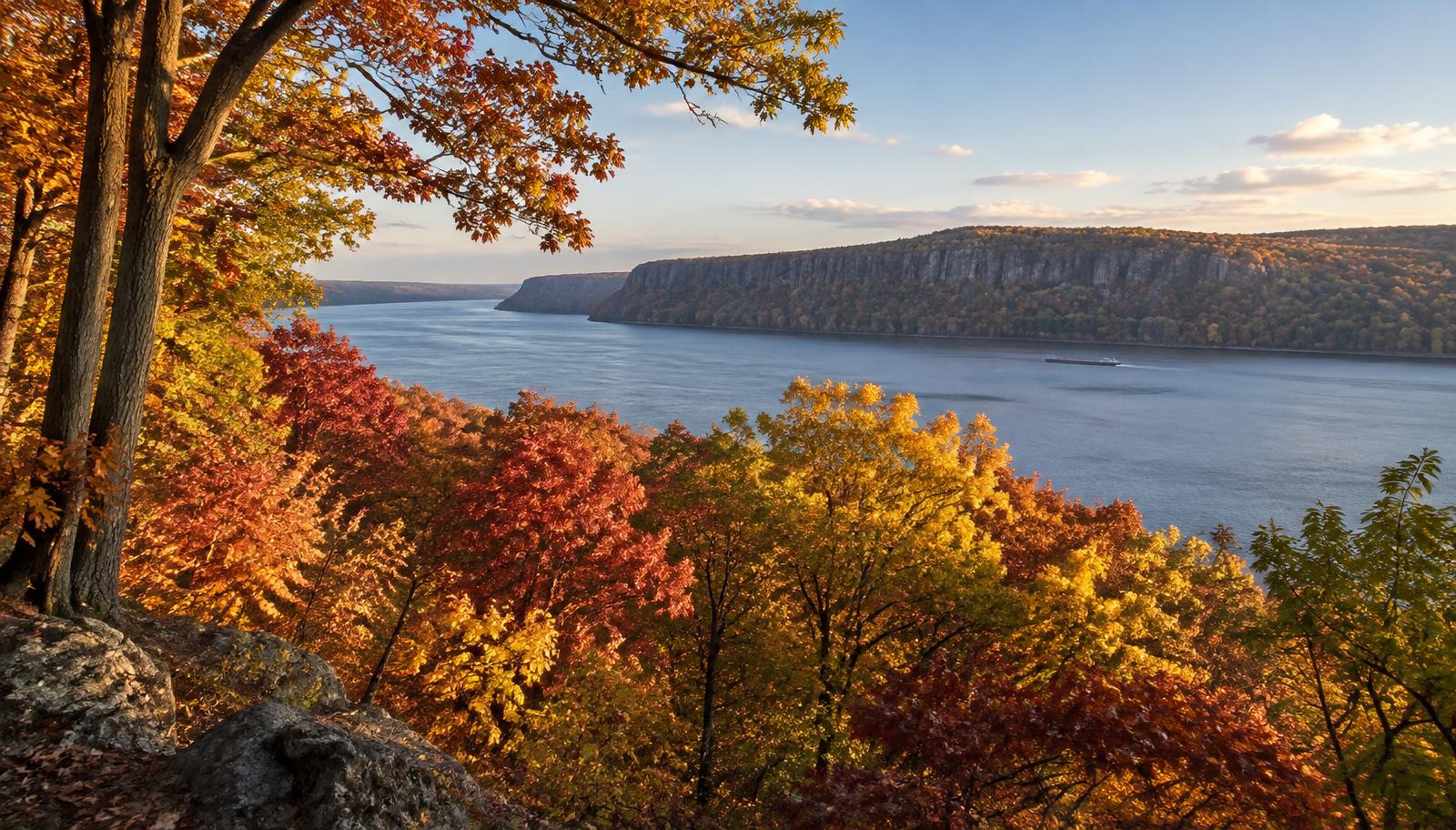
New York City has roughly seven million trees, and for about three weeks every autumn a good number of them do something worth crossing a borough for. The catch is that the city's foliage is unevenly distributed and unevenly timed: the Bronx and upper Manhattan tend to turn before Brooklyn, ridge tops before valleys, and the same park can be half green and half gold in the same week.
This guide covers twelve places across all five boroughs where the colour is reliably good, along with where inside each one to actually go, what else is nearby, and how to get there on public transport. Every spot here is reachable without a car. Most are free.
How to use this guide
- Timing varies every year. Peak colour in NYC generally arrives somewhere between the middle of October and the middle of November, but it depends on rainfall, night-time temperatures and how early the first real cold snap lands. Anyone quoting you an exact date months ahead is guessing.
- The city turns from north to south. If you are visiting in mid-October, the Bronx and Washington Heights are your best bet. By early November, Brooklyn and the harbour parks are usually the stronger call.
- Nine of the twelve spots below are free. The three ticketed ones — the New York Botanical Garden, Brooklyn Botanic Garden and Wave Hill — are gardens, where the payoff is curated planting rather than just quantity of trees.
- Light matters more than the trees. Mid-morning and the hour before sunset are when colour reads properly; flat midday sun washes it out.
- Check hours before you travel. Garden closing times shorten after the clocks change, and cemeteries close earlier than parks.
- Weekday visits are dramatically quieter everywhere on this list except the city parks, which are busy regardless.
Manhattan
Central Park — the North Woods, the Ravine and the Pool
- Neighborhood
- Central Park above 100th Street
- Price
- Free
- Getting there
- B/C to 103rd St, or 2/3 to Central Park North–110th St
- Why it's good in fall: The densest tree canopy in Manhattan, and the part of the park most people never reach
- Best areas within it: The Pool at 103rd Street, the Ravine and the Loch, the Conservatory Garden at Fifth Avenue and 105th
- Photo spot: The stone bridges over the Loch, and the reflections on the Pool in the morning
Central Park's roughly 18,000 trees make it the obvious answer, but the obvious way to do it is wrong: the southern third is the busiest and least wooded part. The north end is where the park was landscaped to feel like upstate — a stream, waterfalls, hemlocks, and a canopy thick enough that you lose the skyline entirely. The Conservatory Garden nearby stays formal and photogenic into November after the woodland has dropped. Give it two hours and walk north to south so you end at the Reservoir in the evening light. Our Central Park fall foliage walk has the detailed route, timing and entrances.
Fort Tryon Park and the Met Cloisters
- Neighborhood
- Washington Heights, Manhattan
- Price
- Park free; Cloisters ticketed
- Getting there
- A to 190th St (the elevator brings you out at park level)
- Why it's good in fall: A ridge-top park with the Hudson and the Palisades as a backdrop — the best-composed autumn view in Manhattan
- Best areas within it: The Heather Garden along the ridge, the Linden Terrace, the paths down toward the river
- Photo spot: The Heather Garden overlook facing the Palisades, late afternoon
This is the most convincing escape from the city on the subway map. The park sits on a ridge 250 feet above the Hudson, and because you are looking across the river at the wooded New Jersey Palisades, you get depth that flat parks cannot deliver — foreground colour, water, then a whole cliff of trees. The Met Cloisters is at the top of the hill, and its cloister gardens are at their best in cool weather. Doing both is a genuinely full afternoon in the quietest corner of Manhattan.
Inwood Hill Park
- Neighborhood
- Inwood, Manhattan
- Price
- Free
- Getting there
- A to Inwood–207th St, or 1 to 215th St
- Why it's good in fall: The last old-growth forest left in Manhattan, and it feels like it
- Best areas within it: The forest trails up the ridge, Shorakapok Rock, the Spuyten Duyvil overlook
- Photo spot: The overlook toward the Henry Hudson Bridge
Inwood Hill is the wildest park in Manhattan — steep, unmanicured, tulip trees and oaks, marked trails that genuinely feel like hiking. It is the borough's best answer to "I want to be in a forest without leaving the city," and it gets a fraction of Central Park's traffic. Wear shoes with grip; the trails get slick under wet leaves. Combine with Fort Tryon just to the south for a full day in upper Manhattan.
Riverside Park
- Neighborhood
- Upper West Side / Morningside Heights, Manhattan
- Price
- Free
- Getting there
- 1/2/3 to 86th St or 96th St
- Why it's good in fall: Four miles of mature London planes and oaks along the Hudson, with sunset over the water
- Best areas within it: The 91st Street Garden, the promenade between 83rd and 96th, the terraces near Grant's Tomb
- Photo spot: The 91st Street Garden path, and the promenade facing west at sunset
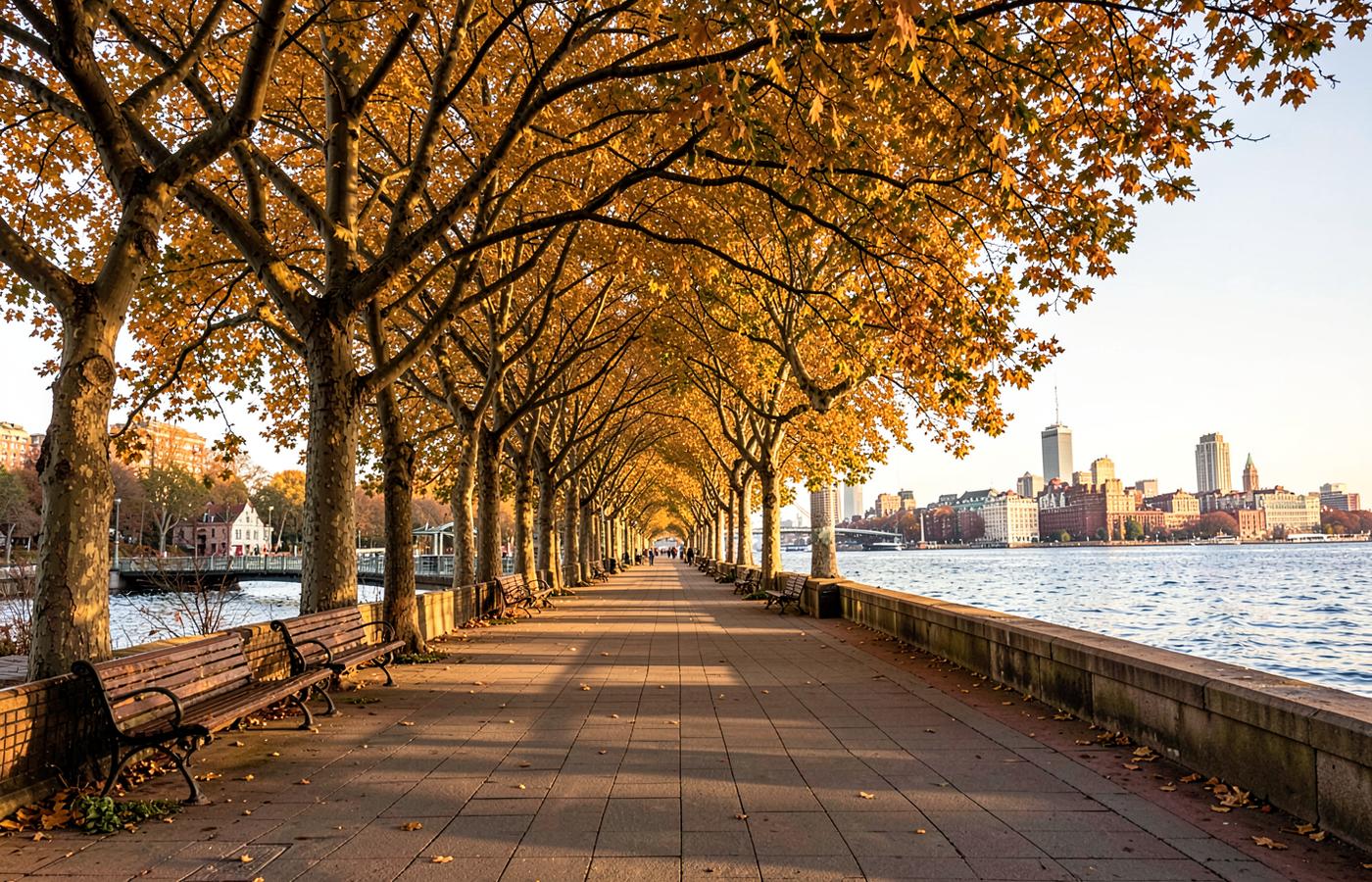
Riverside is the everyday option — a long linear park that requires no planning and delivers a consistent tunnel of gold for weeks. Because it faces west, it is the best foliage sunset in Manhattan, and the paths are flat and easy the whole way. The 91st Street Garden is small but the most photographed stretch. Good for a run, a walk or an hour with a coffee.
Brooklyn
Green-Wood Cemetery
- Neighborhood
- Sunset Park / Greenwood Heights, Brooklyn
- Price
- Free to enter
- Getting there
- R to 25th St
- Why it's good in fall: 478 acres of nineteenth-century landscape design on Brooklyn's highest ground, with harbour views through the trees
- Best areas within it: Battle Hill, the Sylvan Water, the main entrance arch and the ponds behind it
- Photo spot: Battle Hill, looking toward the harbour with colour in the foreground
Green-Wood is the most underrated autumn landscape in New York, full stop. It predates Prospect Park, it was designed as a public park as much as a burial ground, and it has the old, large, deliberately varied trees to prove it — maples, beeches, gingkos, oaks. From Battle Hill you can see the harbour and Lower Manhattan with a full canopy below you. It is quiet, it is free, and on a weekday you will barely see anyone. Be respectful: services happen, and the grounds are not a picnic park. More on Green-Wood.
Prospect Park
- Neighborhood
- Park Slope / Prospect Heights / Flatbush, Brooklyn
- Price
- Free
- Getting there
- B/Q to Prospect Park, or F/G to 15th St–Prospect Park
- Why it's good in fall: Brooklyn's only real forest, plus the best water reflections in the borough
- Best areas within it: The Ravine and the Midwood, the Lullwater, Lookout Hill, the Boathouse
- Photo spot: The Lullwater by the Boathouse, mid-morning, for reflections
Olmsted and Vaux's second act, and arguably their better one. The Ravine holds Brooklyn's last remaining forest and turns properly; the Lullwater and Lake give you water to double the colour. Lookout Hill is the high point and the quietest corner. It turns a week or two later than upper Manhattan, which makes it the right call for an early-November trip.
Brooklyn Botanic Garden
- Neighborhood
- Crown Heights / Prospect Heights, Brooklyn
- Price
- Ticketed; check current hours and admission before you go 2
- Getting there
- 2/3 to Eastern Parkway, or B/Q to Prospect Park
- Why it's good in fall: The Japanese Hill-and-Pond Garden in autumn is the single most photographed seasonal scene in Brooklyn — for good reason
- Best areas within it: Japanese Hill-and-Pond Garden, the Cherry Esplanade (yes, in fall), Osborne Garden
- Photo spot: The torii gate reflected in the pond, with the maples behind it
Everyone knows BBG for the April cherry blossoms and forgets it has a Japanese garden built specifically to be beautiful in autumn — Japanese maples, a pond, a viewing pavilion, all designed to compose. It is a small, dense, deliberate landscape rather than a big wander, which makes it the best foliage hour in the city if you have limited time. Note that the Eastern Parkway entrance has been temporarily closed, so check the current entrance information before you travel 2. Right next door to Prospect Park, so stack the two.
The Bronx
The New York Botanical Garden — the Thain Family Forest
- Neighborhood
- Bronx Park, the Bronx
- Price
- Ticketed
- Getting there
- Metro-North Harlem Line to Botanical Garden (20 minutes from Grand Central), or B/D/4 to Bedford Park Blvd
- Why it's good in fall: Fifty acres of old-growth forest inside a 250-acre garden — the largest uncut woodland left in New York City
- Best areas within it: The Thain Family Forest, the Bronx River gorge, the Native Plant Garden
- Photo spot: The Bronx River waterfall in the forest, and the stone mill by the gorge
If you only do one foliage trip and you want the biggest possible version, this is it. The Thain Family Forest is genuine old-growth — trees that were never cut, a river gorge with a waterfall, and a scale that no city park matches. NYBG also turns earlier than most of Brooklyn, which makes it the right choice for a mid-October trip. Through October and into the first days of November the garden runs its Day of the Dead season on top of the foliage, so you can do both in one ticket: NYBG Día de los Muertos.
Wave Hill
- Neighborhood
- Riverdale, the Bronx
- Price
- Ticketed; admission is free on Thursdays 3
- Getting there
- Metro-North Hudson Line to Riverdale, then a short uphill walk
- Hours
- Tuesday–Sunday, 10am–5:30pm, with last entry 30 minutes before closing and earlier closing in winter hours 3
- Why it's good in fall: A 28-acre garden on a bluff directly above the Hudson, facing the Palisades
- Best areas within it: The Pergola Overlook, the Wild Garden, the woodland paths below the lawn
- Photo spot: The pergola looking across the river at the Palisades
Wave Hill is a former private estate turned public garden, and its whole design points at the river. The lawn and pergola frame the Palisades across the water; the wild garden behind it is intimate and full of texture. It is the most peaceful place on this list and the least crowded, partly because most New Yorkers have never been. Free on Thursdays, closed Mondays 3.
Van Cortlandt Park
- Neighborhood
- Northwest Bronx
- Price
- Free
- Getting there
- 1 to Van Cortlandt Park–242nd St
- Why it's good in fall: The city's third-largest park, with real hiking trails and old forest
- Best areas within it: The Old Croton Aqueduct Trail, the John Kieran Nature Trail around Van Cortlandt Lake, the Northwest Forest
- Photo spot: The lake from the Kieran trail, and the aqueduct path under the canopy
Van Cortlandt gives you the closest thing to a proper hike inside city limits: over 1,100 acres, marked trails, and a section of the Old Croton Aqueduct you can follow for miles. It is also where the city's cross-country running happens, so the trails are well-trodden and easy to follow. Pair it with Wave Hill in the same day if you have the legs.
Queens
Forest Park
- Neighborhood
- Woodhaven / Forest Hills / Richmond Hill, Queens
- Price
- Free
- Getting there
- J/Z to Woodhaven Blvd, or Q to Metropolitan Ave
- Why it's good in fall: The largest continuous oak forest in Queens, and one of the largest in the city
- Best areas within it: The Forest Park Drive corridor, the bridle path, the woodland trails east of Woodhaven Boulevard
- Photo spot: The bridle path under the oak canopy
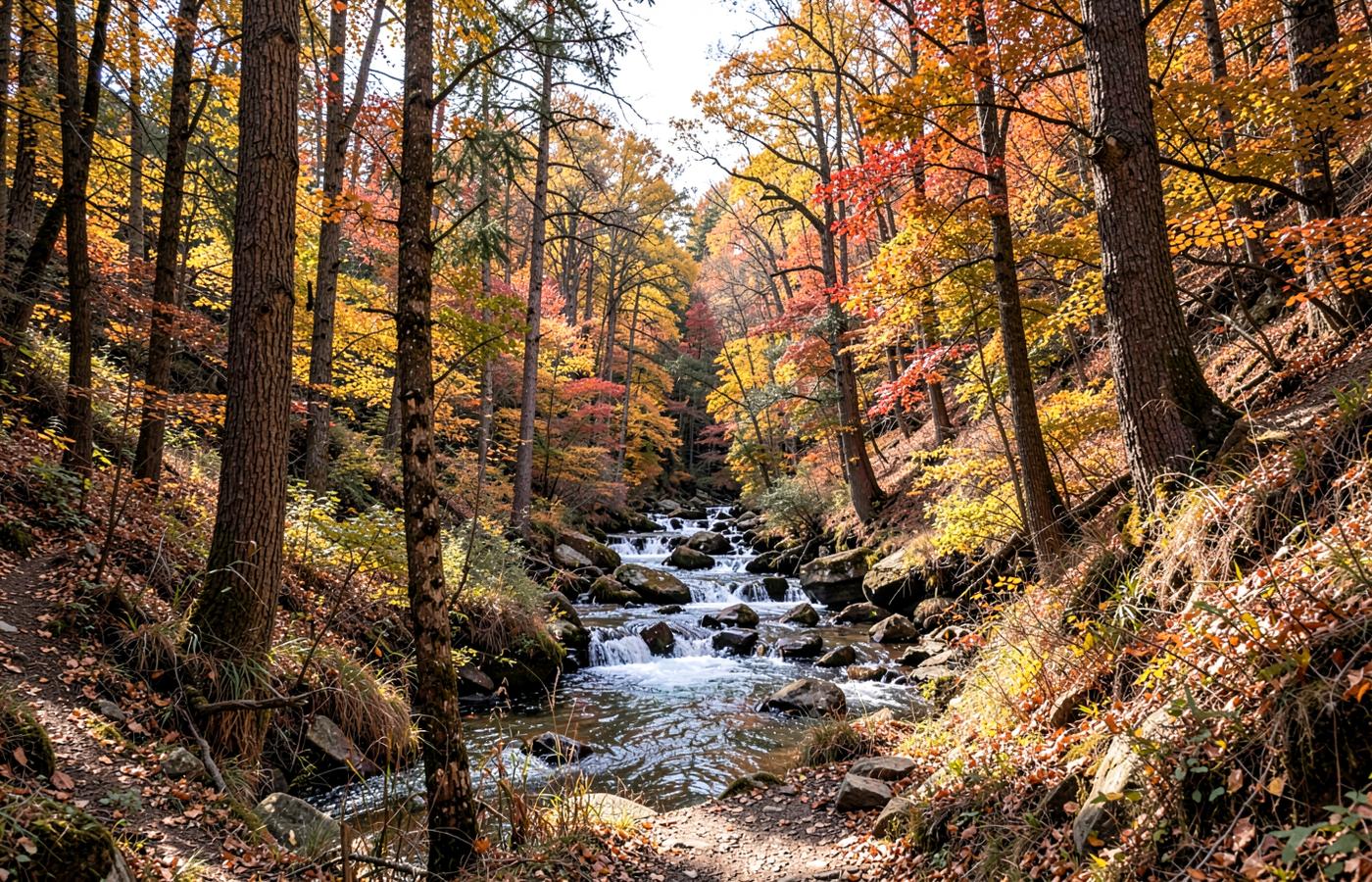
Forest Park earns its name: 165 acres of continuous oak woodland on glacial moraine, most of it never cleared. Oaks turn later and hold longer than maples, which makes this the best late-season option in the city — often still worth it in the second week of November when Manhattan has dropped. There is a bridle path, a carousel and a bandshell, and almost no tourists at all.
Staten Island
Snug Harbor Cultural Center and Botanical Garden
- Neighborhood
- Livingston, Staten Island
- Price
- Grounds free; some gardens ticketed
- Getting there
- Staten Island Ferry from Whitehall Terminal, then the S40 bus (about ten minutes)
- Why it's good in fall: 83 acres of gardens, lawns and mature trees around nineteenth-century Greek Revival buildings
- Best areas within it: The Chinese Scholar's Garden, the allée of trees along the main lawn, the Tuscan Garden
- Photo spot: The Chinese Scholar's Garden courtyard, and the main allée looking toward the temple-front buildings
Snug Harbor is the reason to take the ferry in autumn — a former sailors' retirement home turned cultural campus, with formal gardens and a Chinese Scholar's Garden that is one of the most photogenic small spaces in the city. And you get the harbour crossing for free either way, which is itself the best-value sightseeing in New York. Budget a half day including the ferry.
Two harbour-view options worth adding
Roosevelt Island
- Neighborhood
- Roosevelt Island
- Price
- One subway fare each way on the tram
- Getting there
- Tram from 59th St and Second Ave, or F to Roosevelt Island
- Why it's good in fall: Not the densest colour, but the best framing — trees, water and the Midtown skyline in one frame
- Photo spot: The promenade on the Manhattan side, and Four Freedoms Park at the southern tip
Roosevelt Island is a two-mile walking loop where every view has water in it. The tram ride over is four minutes of glass-cabin skyline for the price of a swipe, and the southern tip has the cherry-lined promenade and Four Freedoms Park. Windy in November, spectacular in late October. Full route in our Roosevelt Island tram and waterfront itinerary.
Governors Island
- Neighborhood
- New York Harbor
- Price
- Ferry fare
- Getting there
- Ferry from the Battery Maritime Building at 10 South Street 4
- Why it's good in fall: Open air, harbour on all sides, the Hills for elevation, and hardly anyone there once summer ends
- Photo spot: Outlook Hill, facing the Statue of Liberty
Governors Island is now open year-round, which makes autumn one of the best times to go: the summer programming crowds are gone, the light is better, and the Hills give you a 360-degree harbour view. It is a flat, easy, car-free walk with the Statue of Liberty on one side and Lower Manhattan on the other. Check current ferry schedules before you travel 4. See Governors Island.
Frequently asked questions
When does fall foliage peak in NYC?
There is no fixed date. Peak colour in the city usually falls somewhere between mid-October and mid-November, and it varies year to year depending on rainfall, night-time temperatures and when the first cold snap arrives. It also moves through the city unevenly — the Bronx and upper Manhattan generally turn first, Brooklyn and the harbour parks last. The reliable approach is to check the NYC Parks foliage tracker a few days before you go 1.
Where is the best fall foliage in NYC if I only have one afternoon?
Fort Tryon Park with the Met Cloisters, if you are in Manhattan — you get ridge-top colour, a Hudson view and a museum in one trip on the A train. If you are in Brooklyn, Green-Wood Cemetery. If you want the biggest version and do not mind a ticket, the Thain Family Forest at the New York Botanical Garden.
Is the foliage in Central Park actually good?
Yes, but only if you go to the right part of it. The North Woods, the Ravine and the Pool above 100th Street have the park's densest canopy and the least foot traffic; the southern end near the Plaza has the least colour and the most people. Our Central Park fall foliage walk covers the route.
Which foliage spots in NYC are free?
Nine of the twelve here: Central Park, Fort Tryon, Inwood Hill, Riverside Park, Green-Wood, Prospect Park, Van Cortlandt, Forest Park, and the Snug Harbor grounds. Only the three botanical gardens — NYBG, Brooklyn Botanic Garden and Wave Hill — are ticketed, and Wave Hill is free on Thursdays 3.
Do I need to leave the city for good fall colour?
No — but the Hudson Valley is genuinely a step up, and it is 80 minutes from Grand Central without a car. If you want mountains and river towns rather than parks, see Cold Spring and the Hudson Valley and our day trips from NYC by train guide.
What is the best time of day for foliage photos?
The first two hours after opening and the hour before sunset. Overcast days are better than you would expect — flat light saturates red and orange, while harsh midday sun washes everything out. Remember that sunset moves from after 7pm in mid-September to before 5pm by mid-November.
Plan the rest of your fall
Foliage is a three-week window, and the rest of the season is running at the same time — festivals, Halloween, the marathon, and the holiday openings at the end of November. Our seasonal NYC hub keeps track of what is current.
From here: the 25 best things to do in NYC this fall covers the whole season, fall date ideas in NYC pairs several of these walks with dinner, and our day trips from NYC without a car guide gets you out to the Hudson Valley when the city has dropped its leaves.