
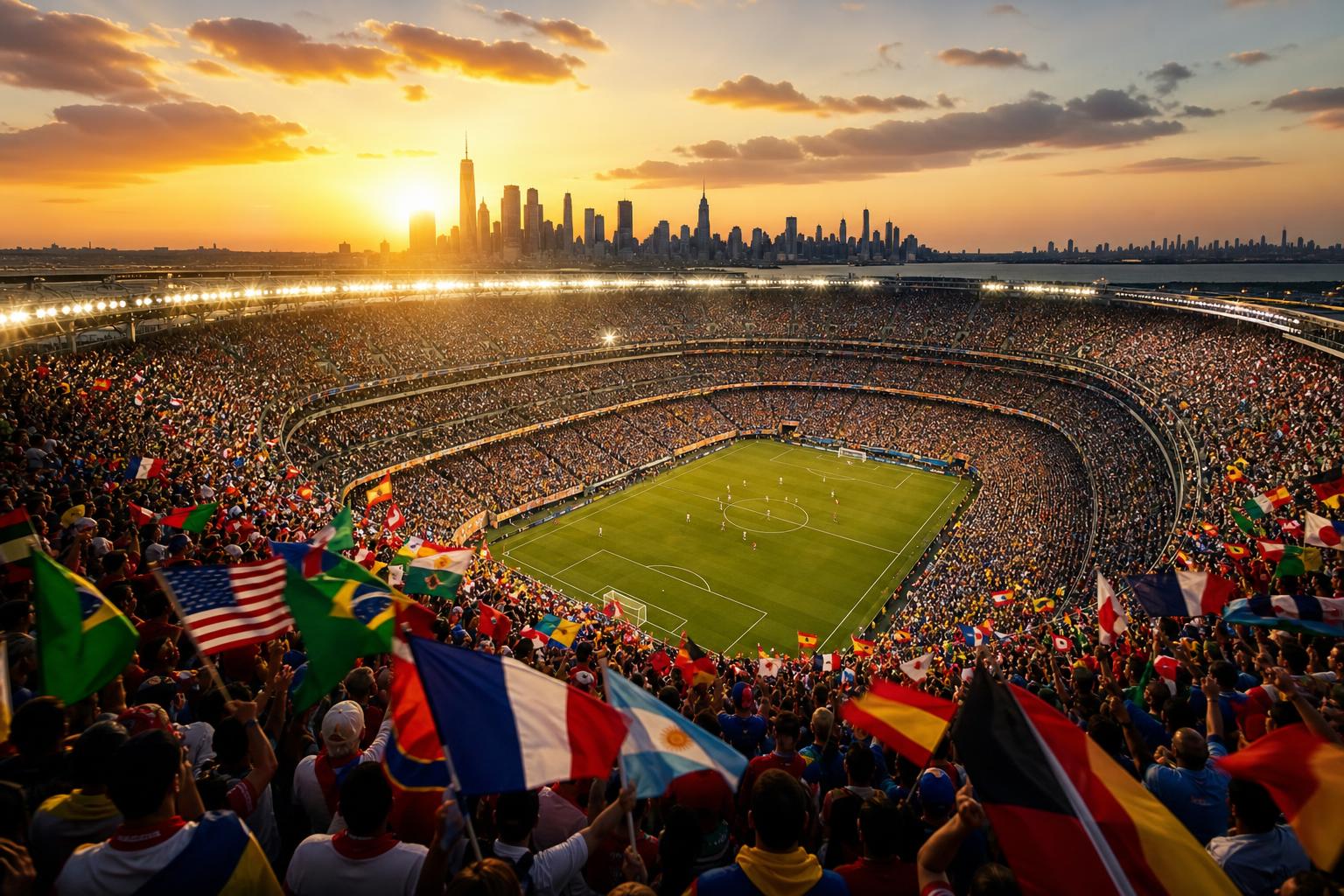
New York City has hosted Olympic torch relays, papal visits, royal weddings of the stage and screen variety, and more parades than there are weeks in a year. But in the summer of 2026, the city is bracing for something different — something louder, more global, and more contagious than anything we've seen in a generation. The FIFA World Cup has come to town, and New York is the beating heart of it.
For the next several weeks, this city of eight million is essentially the unofficial capital of world football. Flags hang from fire escapes. Languages you don't usually hear on the L train fill the platforms. Restaurants in Queens are running specials in three currencies. And every TV screen, from a Williamsburg dive bar to a Midtown hotel lobby, is tuned to the same green rectangle.
If you live here, you can feel it. If you're visiting, you're about to.
Why NYC Sits at the Center of the 2026 FIFA World Cup
The 2026 World Cup is the first ever co-hosted by three nations — the United States, Mexico, and Canada — and it's the biggest in tournament history with 48 teams and 104 matches. Of all the host cities, only a handful carry the kind of international gravity that turns a sporting event into a cultural moment. New York is at the top of that list.
The region is hosting some of the tournament's most consequential matches, including the final on July 19, 2026 at MetLife Stadium. That single fact has rewired the city's summer. Hotels booked out a year in advance. Restaurants printed multilingual menus. The MTA quietly added service. Madison Square Garden cleared its calendar. Every cultural institution in town built a World Cup tie-in.
This isn't just a sports event passing through. It's the largest international gathering New York has hosted in decades — bigger than any single Olympic bid, bigger than the 1994 World Cup, bigger, in some ways, than the city is used to being.
Why the World Cup Matters to New York
The economic impact is staggering. Early estimates from NYC Tourism + Conventions project that the World Cup will generate over $2 billion in regional economic activity, with hotel occupancy across the five boroughs pushed near full capacity for nearly a month. International visitor spending is expected to be the highest of any single event in city history.
That money doesn't just sit in Midtown. It flows into:
- Restaurants in Astoria, Sunset Park, Jackson Heights, and Washington Heights, where international fans gravitate toward food that reminds them of home.
- Local bars that have, in many cases, been quietly building soccer audiences for a decade and are now reaping the reward.
- Small businesses — bodegas selling jerseys, print shops cranking out flags, taxi drivers working double shifts, food trucks following the foot traffic from Penn Station to the PATH train.
- Cultural institutions that have programmed exhibitions, watch parties, and pop-ups to capture the visiting crowds.
Tourism, too, is up — not just for game days. Visitors are turning World Cup trips into 10-day NYC vacations, layering in Broadway, museums, day trips to the Hamptons, and weekend escapes upstate. For a city still cementing its post-pandemic tourism recovery, this is the boost of a lifetime.
MetLife Stadium and the NYC Region
MetLife Stadium, just across the river in East Rutherford, New Jersey, is one of the most important venues of the entire tournament. With a capacity of over 82,000, it's hosting eight matches, including high-profile group stage games, two round-of-16 fixtures, a semifinal, and the championship final itself.
For visitors, the stadium is more accessible than people assume. NJ Transit runs direct trains from Penn Station to the Meadowlands Sports Complex Station on game days, with shuttle buses from Secaucus Junction backing them up. The trip from Midtown takes roughly 25–30 minutes, and FIFA's official fan transport program is adding capacity throughout the tournament.
On game days, the area transforms. Tailgating in the parking lots starts hours before kickoff. Fans in matching kits stream off every train. Vendors line the concourses with food from every host nation. Inside the stadium, the noise is unlike anything the venue sees during football season — it's tuneful, organized, and continuous, the kind of sound that only a global audience makes.
If you can't get a ticket — and most people can't, given the demand — the MetLife Stadium Fan Zone in the parking lots is open to ticketed and non-ticketed visitors alike, with giant screens, food, music, and the closest you can get to the matchday energy without a seat inside.
Soccer Fever Across the Five Boroughs
What makes New York's World Cup different from, say, Dallas's or Kansas City's, is that the city itself is a World Cup. Walk through Jackson Heights and you'll find Colombian fans painted yellow, blue, and red, packed into restaurants on 82nd Street. Cross over to Astoria, and Greek and Brazilian flags share the same block. Sunset Park is one giant Mexican fan zone. Washington Heights is alive every time the Dominican team kicks off (a first-ever appearance worth celebrating). Little Senegal in Harlem turns out for every Senegalese match.
This isn't manufactured energy. It's the city being itself, louder.
The growth of soccer culture in New York has been quietly building for years — through NYCFC's rise, through the explosion of supporter groups for Premier League and La Liga clubs, through immigrant communities who never stopped watching the sport even when nobody else in town cared. The World Cup is the moment all of that becomes visible at once.
Best Places to Watch World Cup Matches in NYC
Whether you've got a ticket or not, watching the games is part of the experience. Here's where New Yorkers are heading:
Classic soccer bars
- The Football Factory at Legends (Midtown) — the city's most serious soccer bar, every match on every screen.
- Smithfield Hall (Midtown) — multiple floors, dedicated to international fan groups.
- The Globe Pub (Murray Hill) — long-time home for European supporters.
- Banter Bar (East Village) — Aussie-owned, surprisingly great for South American matches.
Rooftops and beer gardens
- Westlight atop The William Vale (Williamsburg) — skyline views with select matches on screens.
- Bohemian Hall & Beer Garden (Astoria) — the city's oldest beer garden, electric for every European match.
- The Standard Biergarten (Meatpacking) — daytime matches with a downtown crowd.
- The Rooftop at Pier 17 (Seaport) — outdoor screenings for the biggest knockout fixtures.
Outdoor viewing and fan festivals
- FIFA Fan Festival at Liberty State Park — the official festival site, free, with the Manhattan skyline as a backdrop. Giant screens, live music, food from every host nation.
- Times Square — official live screenings for select matches, transforming the Crossroads of the World into the loudest stadium in the city.
- Brooklyn Bridge Park — a chill alternative for waterfront viewing.
- Hudson Yards — pop-up watch events throughout the tournament.
Neighborhoods to wander on game day
- Jackson Heights for South American matches.
- Sunset Park for Mexico games.
- Astoria for European nights.
- Harlem for African team matchups.
How the World Cup Is Changing NYC Tourism
The visitor profile this summer doesn't look like a typical New York tourist. The average World Cup traveler is staying 9 days, not 4. They're booking hotels in neighborhoods that aren't usually on the tourist circuit — Long Island City, Williamsburg, Harlem, Jersey City. They're spending more on food and nightlife than on shopping. They're younger, more international, and far more likely to venture into the outer boroughs.
Hotel occupancy is projected to top 95% across the five boroughs during the tournament's peak weeks, with average nightly rates up significantly over a typical summer. Airbnb listings sold out months ago. Even the cruise ship terminals in Brooklyn and Manhattan are being used as floating hotels for visiting fan groups.
It's also changing which neighborhoods feel touristy. Flushing is having a moment thanks to its proximity to Citi Field watch parties. Red Hook is suddenly on every visitor's "things to do in NYC" list because of its waterfront fan events. The city's tourism map is being redrawn in real time.
World Cup Events Happening Around NYC
Beyond the matches themselves, the city is one long event calendar. A few highlights:
- FIFA Fan Festival at Liberty State Park — the official free fan festival, daily programming for the entire tournament.
- Times Square Live Matches — major screenings under the lights of Times Square.
- Brooklyn Steel "Football & Culture" Series — music, film, and panel events exploring soccer's global influence.
- Lincoln Center Plaza Screenings — selected matches on outdoor LED screens, free and open to all.
- Smorgasburg World Cup Editions — Brooklyn's iconic food market running themed weekends in honor of each host nation.
- MoMA PS1's "Global Game" Exhibit — visual art inspired by the world's most-watched sport.
- Pier 17 Rooftop Soccer Nights — match screenings paired with live DJs and food pop-ups.
- Restaurant Week: World Cup Edition — multi-course prix-fixe menus across the city inspired by participating nations.
The Long-Term Impact on New York City
It's tempting to treat the 2026 World Cup as a 39-day event. It isn't. The legacy will outlast the trophy lift.
For one, soccer in America is having its decade. With the World Cup landing here, Lionel Messi already playing in Major League Soccer, NYCFC opening a new dedicated stadium in Queens, and youth participation at all-time highs, the sport is no longer a niche import — it's a permanent fixture. The kids watching this World Cup in Jackson Heights and Inwood are the ones who will fill stadiums for the next 30 years.
For another, the tournament cements New York's position as one of the world's truly global cities — not just a financial or cultural capital, but a sporting one. Future bids for the Olympics, the Women's World Cup, and a long list of international championships now have a clear precedent: New York can do this, and do it well.
The infrastructure investments — improved transit access to MetLife, upgraded fan zones, new partnerships between the city and its outer-borough business districts — are not coming down on July 20. They'll shape how New York hosts events for the next 20 years.
Local Recommendations for Visitors
If you're coming to New York for the World Cup, here's how to do it like someone who lives here:
- Stay outside Midtown. Long Island City, Williamsburg, Astoria, and Jersey City are cheaper, more interesting, and just as well connected.
- Get an OMNY card (or just tap your contactless credit card) for the subway. Cabs and rideshares on match days will be a nightmare.
- For MetLife games, take NJ Transit from Penn Station — period. Don't try to drive.
- Eat in the boroughs. Manhattan has plenty of restaurants, but the best matchday food is in Sunset Park, Jackson Heights, and Astoria.
- Watch at least one match in a neighborhood that isn't your team's. The hospitality in Harlem, Flushing, and the Heights is something Americans don't always realize they have.
- Build in a non-soccer day. Use a rest day for a Hudson River cruise, a walk across the Brooklyn Bridge, an evening on the High Line, or a trip up to Storm King.
A Final Whistle
For one extraordinary summer, New York is the soccer capital of the world. Not Madrid, not Buenos Aires, not London — New York. The city of skyscrapers, subway musicians, and slice joints has, almost overnight, become the place where the world's biggest tournament feels most at home.
It will end, of course. The flags will come down. The bars will go back to baseball. The streets will quiet. But something about the city will be permanently changed by what happens here this summer — a deeper love for the global game, a new map of which neighborhoods we celebrate in, a generation of New Yorkers who grew up with the World Cup happening in their backyard.
For 39 days, New York is the world's stadium. Get out there and live it.
Frequently Asked Questions
When is the 2026 FIFA World Cup final in New York?
The 2026 FIFA World Cup final is scheduled for July 19, 2026, at MetLife Stadium in East Rutherford, New Jersey.
How many matches is the NYC region hosting?
The MetLife Stadium region is hosting eight matches, including group stage games, two round-of-16 matches, a semifinal, and the final.
What's the easiest way to get to MetLife Stadium from Manhattan?
Take NJ Transit from Penn Station directly to the Meadowlands Sports Complex Station on match days. The ride is roughly 25–30 minutes.
Are there free World Cup events in NYC?
Yes. The FIFA Fan Festival at Liberty State Park is free and open daily during the tournament, along with public screenings in Times Square, Lincoln Center, and Brooklyn Bridge Park.
Where should I watch a match if I don't have a ticket?
For the full atmosphere, head to Liberty State Park's Fan Festival, a classic soccer bar like The Football Factory, or an immigrant-anchored neighborhood like Jackson Heights or Astoria when their team is playing.
Is it worth visiting NYC during the World Cup?
Absolutely — but book early. Hotels and flights are selling at premium prices. If you're flexible, mid-week stays during group stage are the best value.
Which NYC neighborhoods are most into the World Cup?
Jackson Heights, Astoria, Sunset Park, Washington Heights, Flushing, and Harlem each turn into rolling block parties when their respective nations play.